Location: India

Video-1-Web (2)

EU–India Free Trade Agreement: New Opportunities for European Businesses

The newly agreed EU–India Free Trade Agreement is set to create the world’s largest free trade...
Read More
• The EU-India FTA creates the world’s largest free trade zone. The deal covers 92 percent of EU exports to India and nearly all trade volume of Indian exports to the EU • Estimates have the EU saving nearly USD5 billion in duties annually while exports to India could more than double by 2032 • Europe’s automotive, machinery and services sectors are among those that stand to benefit greatly from the trade deal India was once known for its relatively protectionist approach, which weighed on the economy. The situation has changed rapidly since 2014 with the country having reached 10 free trade agreements. However, the recently agreed upon EU-India FTA is one of never-before-seen size and scope. Asian Insiders India Partner Priti Verma shares insights on what the deal means for European businesses and examines potential opportunities now available. Upon the conclusion of negotiations, European Commission President Ursula von der Leyen hailed the bloc’s free trade agreement with India as the mother of all deals. This was not the usual hyperbole or bluster that surrounds the conclusion of these pacts. Instead, it was a realisation of the EU-India FTA’s true size and scope as well as the positive impact the deal brings to both sides. The coupling of the second and fourth-biggest global economies creates the world’s largest free trade zone. It’s also further proof that global partnerships are in flux. As the influence of existing trade partners wanes, a strengthening of different relationships, such as the FTA between Europe and India, is requiring businesses to reevaluate their strategies. The deal has been hailed as a victory for both sides. In terms of Indian exports to the EU, 97 percent of tariff lines covering more than 99 percent of current trade value is covered in the FTA. More than 70 percent of these are eligible for immediate duty elimination while a further 20 percent are slated for zero-duty access in the next three to five years depending on type. Conversely, about 92 percent of EU exports to India, accounting for 97.5 percent of trade value, have been included in the pact. Almost half of existing tariff lines will receive immediate duty elimination. Another 40 percent will see a phased elimination of duties over a period spanning five to 10 years. For European companies considering entry into India, the FTA helps level the playing field and ensures much-needed stability. Key points in the agreement include: • Lower or no tariffs and most goods • A clearer framework on both legal and competitive matters, including intellectual property rights • An increased number of opportunities for partnerships and investment in India • More streamlined market access What will the impact of the EU-India FTA be? Given the sheer size of the two economies involved, the impact of the EU-India FTA will be massive. Some of the early details highlight this reality. According to the European Commission, the EU could achieve nearly USD5 billion in annual duty savings as exports surge. Approximately USD220 billion in goods and services is now traded between the two annually. The volume of EU goods exported to India is projected to double by 2032. That is huge, considering the latter’s current position as the world’s fourth-largest economy and the future growth it is likely to experience. Projections for the 2027 fiscal year alone indicate the economy will expand by upwards of seven percent. Equally important, deeper economic integration between the two sides will not only support growth but also improve the stability of global supply chains at a time when other trading partners have become less reliable. Understanding opportunities of the FTA In order to gain widespread access to European markets, India was willing to grant several major concessions that provide companies with significant opportunities moving forward. In particular, the automotive, machinery and services sectors appear likely to benefit. Automotive India is set to reduce tariffs on European carmakers to 10 percent over the next five years. There will also be a quota-based access system in place for up to 250,000 EU vehicles each year. Electric Vehicles could be a potential boon given Europe’s expertise in the field and India’s state plans to reduce emissions and shift away from internal combustion engine cars, trucks and buses. EV components and infrastructure stand to benefit under the FTA. Machinery Currently, machinery and electrical equipment account for the largest share of EU exports to India. The majority of tariffs in this category will eventually fall to zero in the coming years. Key products include medical devices, chemicals and construction equipment. This comes at a crucial time for India. The country is scaling efforts in infrastructure, construction and healthcare which could all benefit from European machinery and equipment. Supply-chain diversification The FTA now provides a foundation for European organisations to integrate India into their supply chains as part of widespread diversification efforts. Nuances of a deal The FTA between India and the EU has been almost 20 years in the making. Discussion took place in 2007 but failed to get over the line due to various disagreements. Talks resumed in 2022, and a consensus was reached regarding several key points. Yet a few items are worth highlighting. For instance, the EU's Carbon Border Adjustment Mechanism, which sees a fee levied on EU imports of steel, cement and other high-carbon goods, remains in place on Indian steel despite the FTA. Instead, Europe has committed to investing roughly USD600 million to help India reduce emissions caused by steel and aluminium producers. Beyond that, a few sectors in India have been protected in the FTA, including agriculture. A few items, such as apples, pears and peaches, are eligible for phased tariff reductions. Other products like spirits will be lowered slightly but remain at relatively high levels. While expected, it does highlight the need for companies to explore the nuances of the deal. Nowhere is that more evident than in the rules of origin, product-specific rules and other potential challenges related to supply chains. The FTA does make it easier for European companies to set up manufacturing hubs in India, but high logistics costs and some problematic customs regulations must now be addressed by the government. Final thoughts on Indian market entry The EU-India FTA will allow European companies to access opportunities in a large, rapidly growing economy. Tariff eliminations or reductions are the headline, but the deal also provides a framework for other key areas to reduce risk. However, entry or expansion into India can still pose challenges for businesses unfamiliar with the country’s operating environment. At Asian Insiders, we can ensure your company has the necessary research required to make an informed decision and assist with the crucial aspects of entry. To learn more about opportunities in India, please contact Jari Hietala, Managing Partner: jari.hietala(at)asianinsiders.com or Priti Verma, India Partner: priti.verma(at)asianinsiders.com

Understanding the Impact and Opportunities of the EU-India FTA

The EU-India FTA has been hailed as a victory for both sides. For European companies, the opportunities...
Read More
Asia AI opportunities

Asia’s Diverse AI Ecosystem Unlocks New Opportunities

Asia has several AI opportunities for international companies, including local talent development,...
Read More
biotechnology india growth

Why Biotechnology Could Be India’s Next Major Growth Sector

Biotechnology is playing an increasingly important role in India after a decade of impressive...
Read More
India’s-EV-Revolution-Web

India’s EV Revolution: Growing Opportunities for Foreign Investment

India’s electric mobility sector is accelerating fast — and foreign investors are taking notice....
Read More
-Asia’s-Food-&-Beverage-Evolution-Web (1)

Asia’s Food & Beverage Evolution: Growth Driven by Health and Lifestyle Shifts

Asia’s food and beverage industry is undergoing a major transformation. A growing middle class,...
Read More
Video-4-Web

Energy Storage in Asia: Opportunities Amid Renewable Growth

Asia’s energy storage market is booming, driven by rapid adoption of renewables such as solar,...
Read More
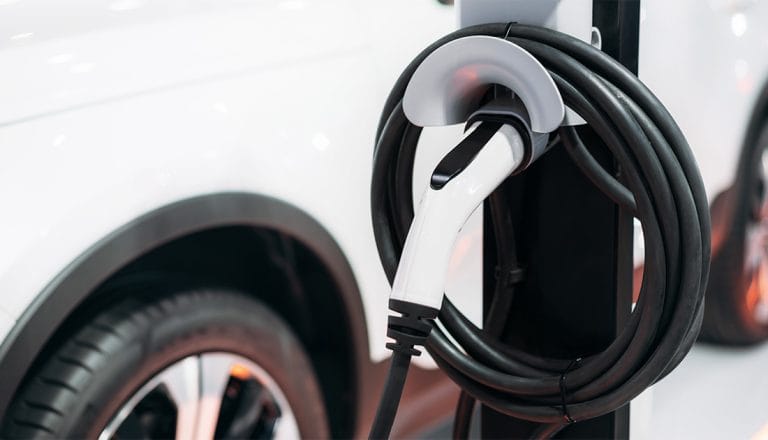
investment electric mobility India

Why is Foreign Investment Focused on Electric Mobility in India?

Foreign investment opportunities for electric mobility in India include electric vehicle manufacturing,...
Read More
Video-2-Web

India BESS Market: Growth, Opportunities and Foreign Investment Outlook

India’s battery energy storage systems (BESS) market is on the rise, with projections to surpass...
Read More
Video-5-Web

Asia’s Data Centre Boom: Investment Opportunities and Market Outlook

The Asian data centre market is experiencing unprecedented growth, driven by AI, cloud computing,...
Read More